|
|
||||
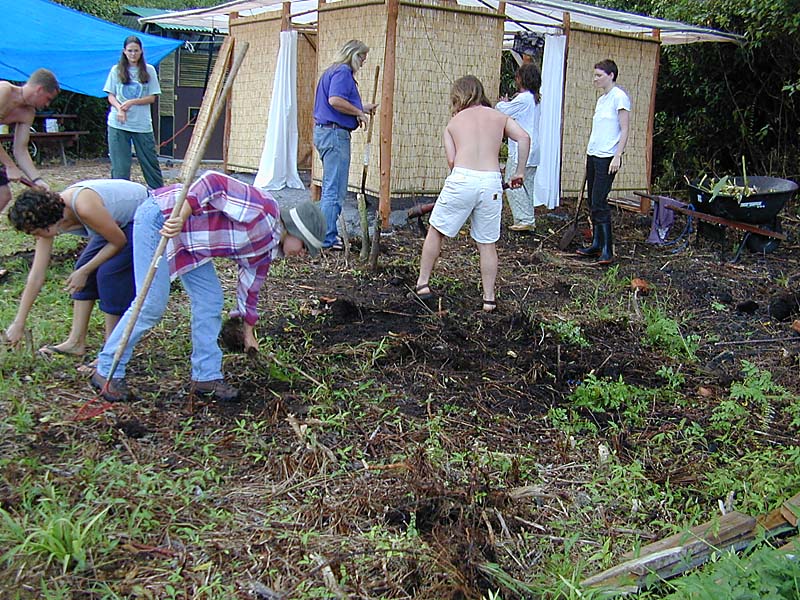 click here for Hi Res image Earlier observations, adjacent to La'akea's kitchen, indicated that Taro thrives in the high phosphate environment of gray water. A site was chosen next to the outdoor showers to harvest more phosphate-rich gray water and grow a new crop of Taro. Initial clearing of this site commenced - the biggest challenge was removing the large lava rocks with O'o bars and picks. |
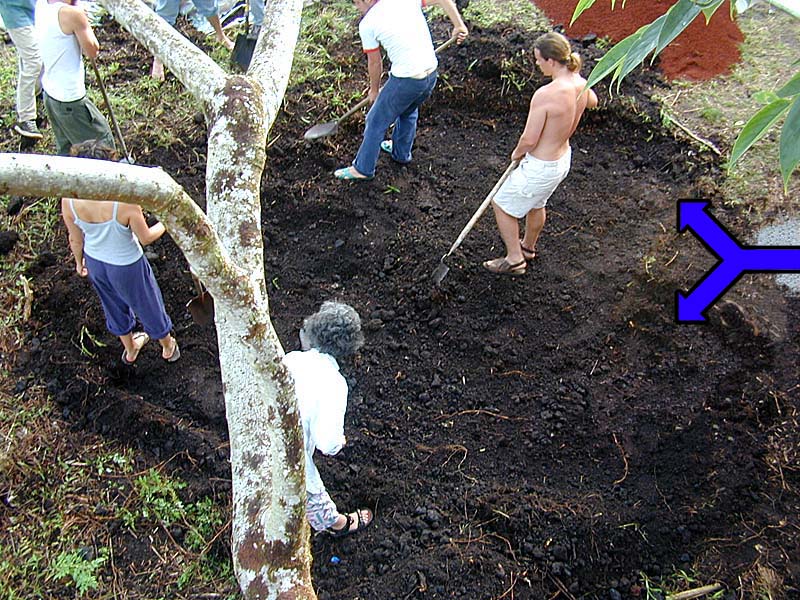 click here for Hi Res image As the site clearing advanced, Don observed that shape resembled a heart (also the shape of a taro leaf). The students then further developed this shape. A "Y" shape channel was later created at the top of the garden to evenly distribute the gray water from the showers (see arrows on right of image). |
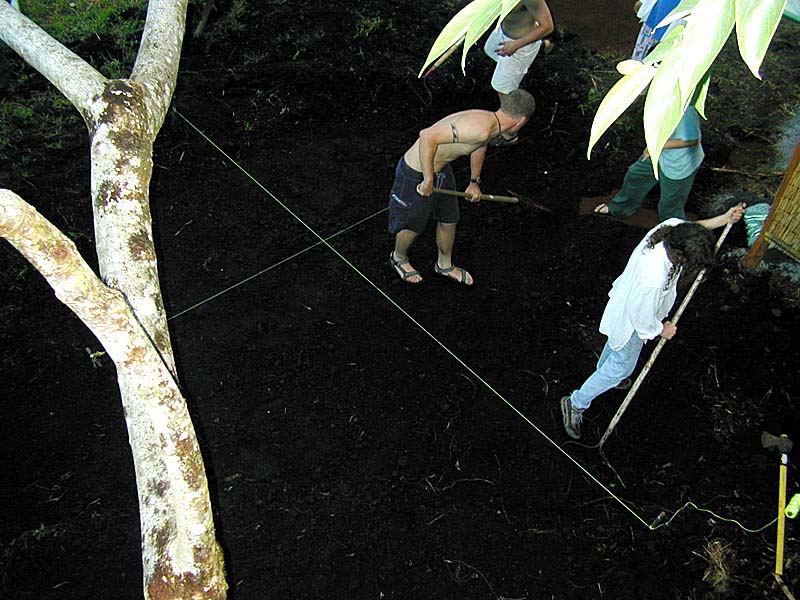 click here for Hi Res image The enthusiasm of the students carried them into nightfall as they made a slight slope from the top of the garden to its base. They used line leveling techniques to create the proper slope. |
||
|
|
||||
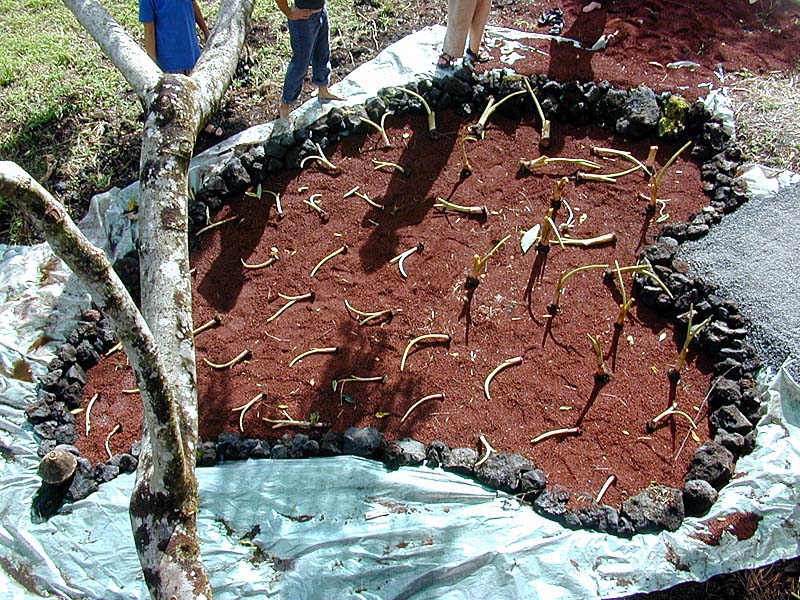 click here for Hi Res image The next day when the photographer returned to the site, the heart shape had a new twist at the end - based on the principles of Feng Shui. The students had also placed a layer of plastic, lined with lava rocks and filled with red cinder for good drainage. The Taro divisions were set in place. |
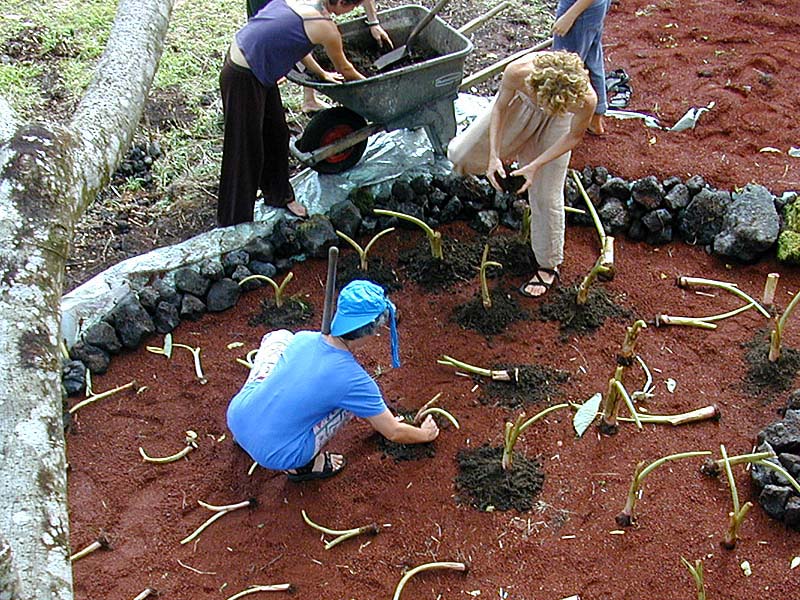 click here for Hi Res image Mounds of Macadamia nut are piled around the taro plants. |
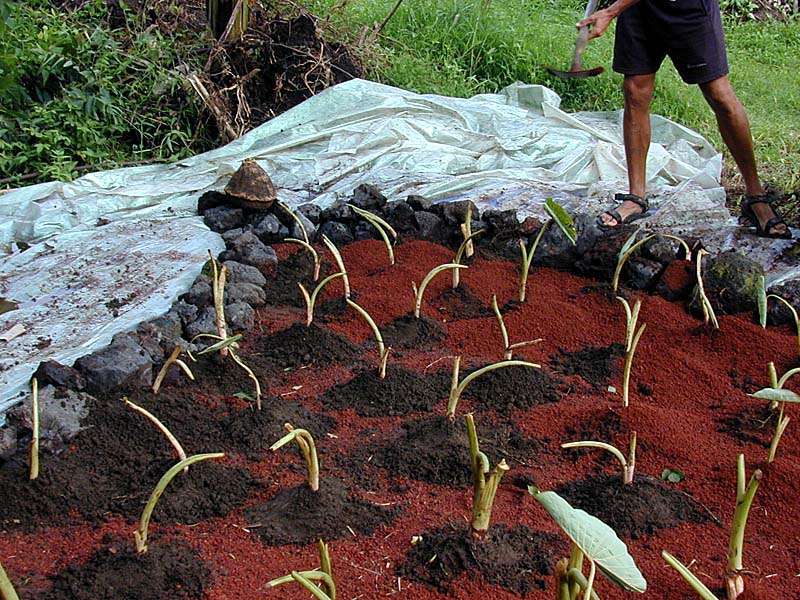 click here for Hi Res image Red cinder is placed on top of the mounds of mulch to hold it all in place. |
||
|
|
||||
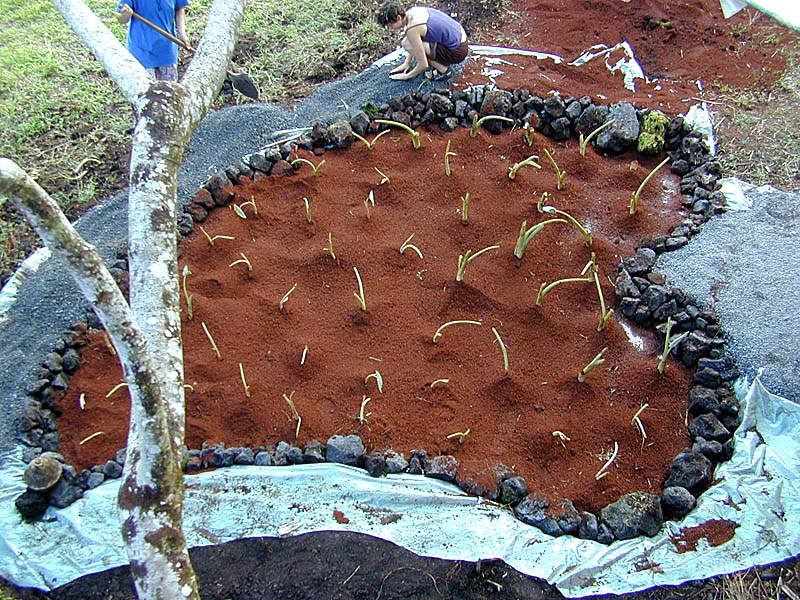 click here for Hi Res image Gravel is placed on top of the plastic around the edge of the garden to hold the plastic down and provide a bit more water drainage from the edge into the garden. The showers are run to fill the garden with water |
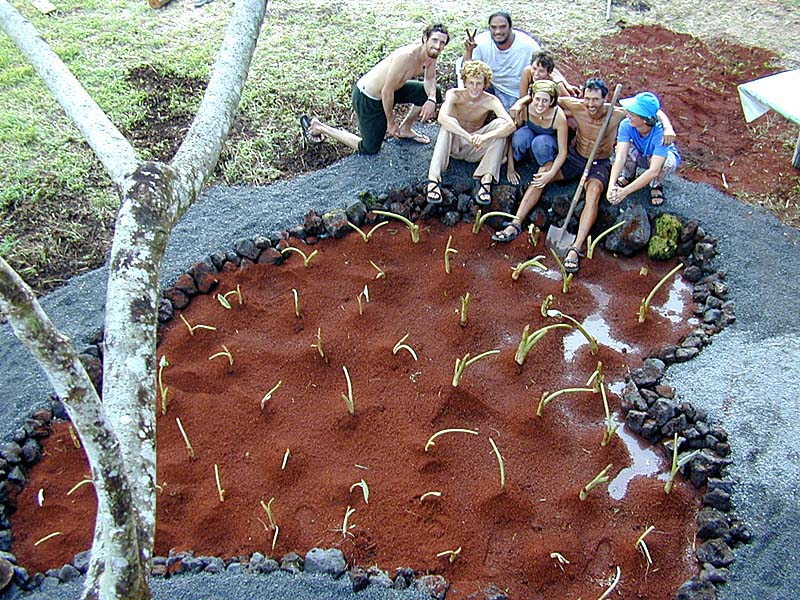 click here for Hi Res image Oh, would you just look at these happy people who love their work and love working together! |
|||
|
|
||||