|
|
||||
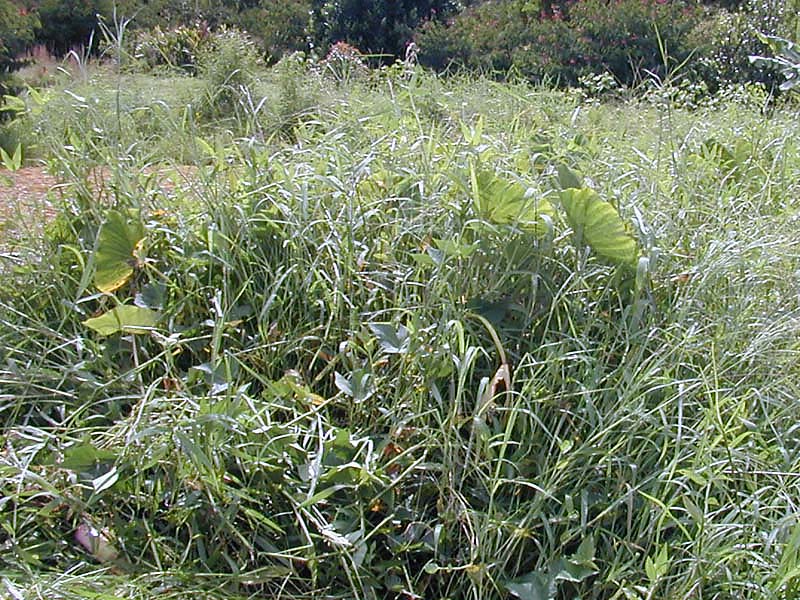 click here for Hi Res image The site was a sparse taro patch overgrown with grass and weeds. The Taro was harvested prior to the next step. |
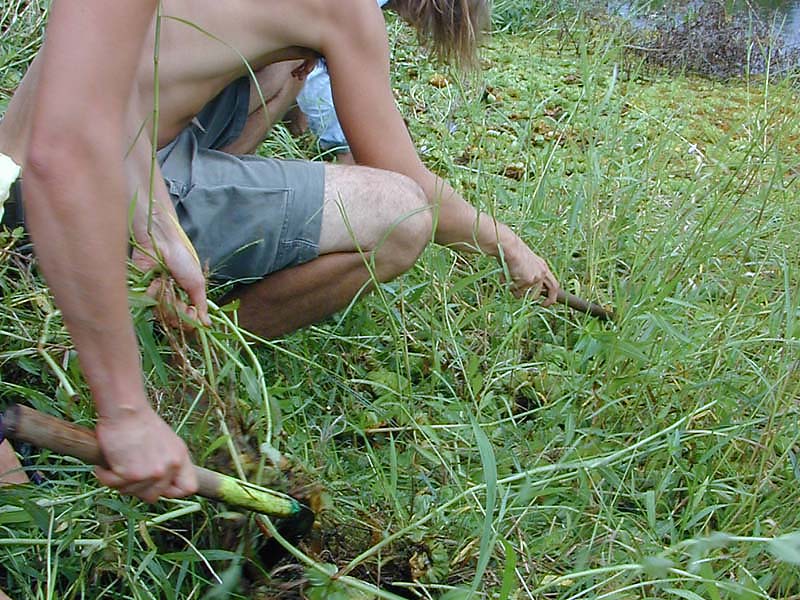 click here for Hi Res image Grass was trimmed with the grass scythe. |
 click here for Hi Res image Banana leaves are layered on with a little lemna (duck weed) from the pond. |
||
|
|
||||
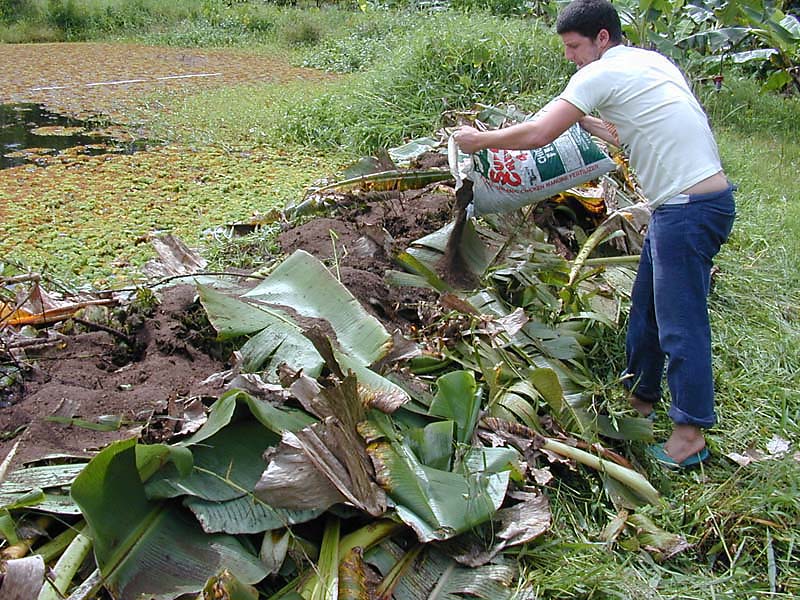 click here for Hi Res image Manure is spread over the banana leaves. |
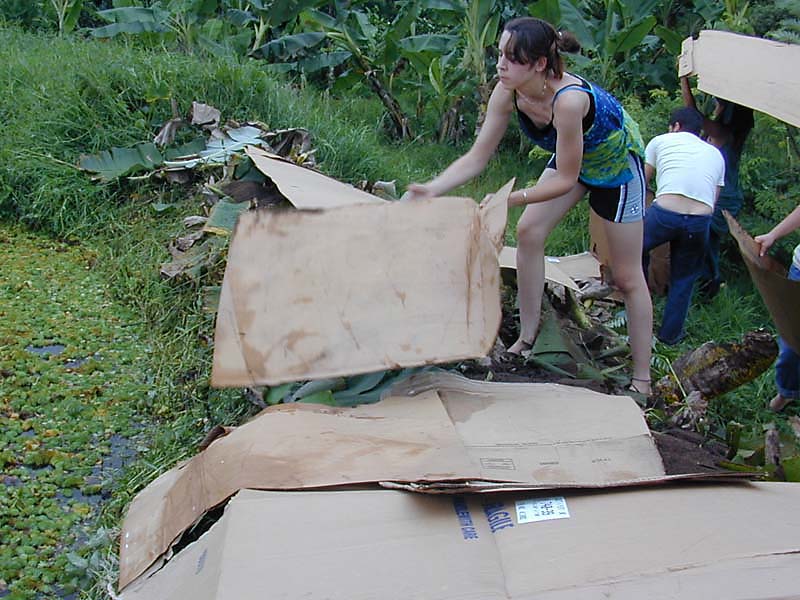 click here for Hi Res image Cardboard is set on top of manure. A six inch overlap keeps the grass from growing through the cardboard. |
 click here for Hi Res image Don determines that the slope is to great for effective sheet mulching and instructs the students to remove the layers and lower the slope. The above image is after the slope has already been lowered and re-layered. |
||
|
|
||||
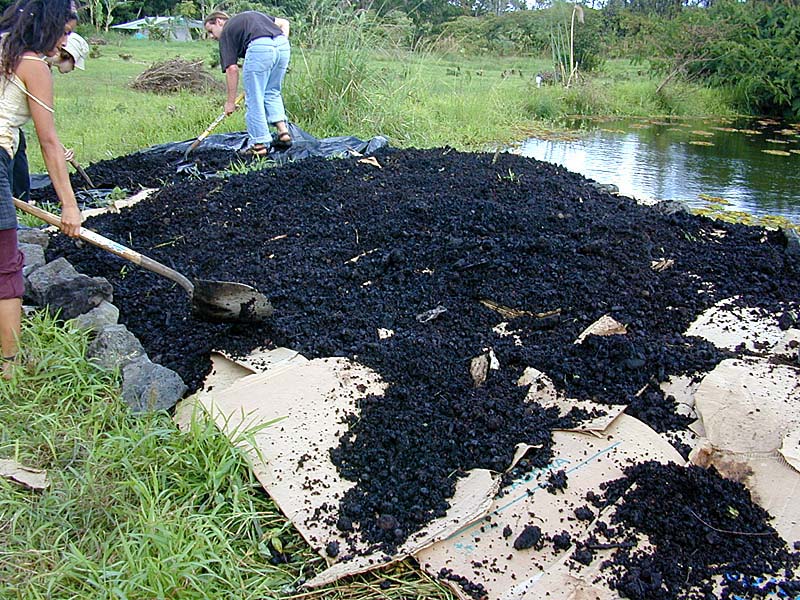 click here for Hi Res image Macadamia nut compost is spread over cardboard to provide an initial growing medium. Rocks are placed on the lower slope for support. |
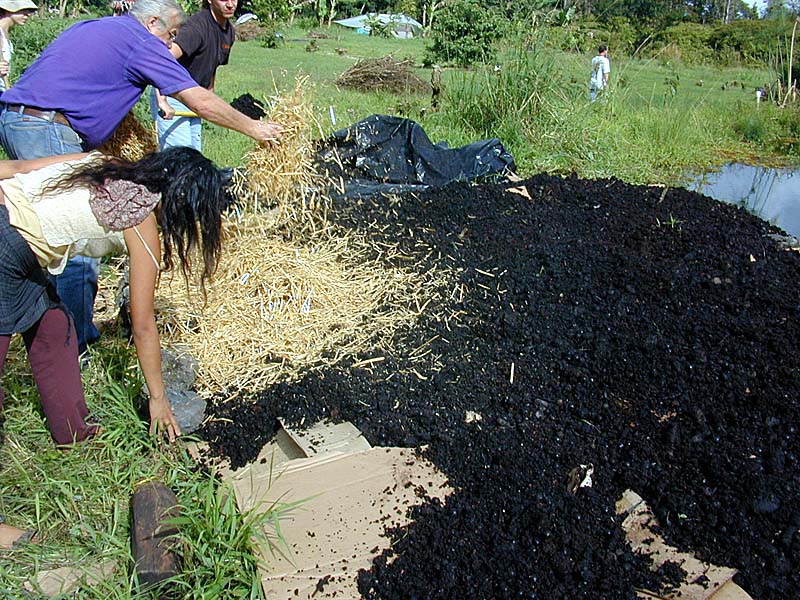 click here for Hi Res image A thick layer of straw is laid over the Mac. nut compost to keep grass seeds from sprouting, to provide protection and carbon for soil development and for aesthetics. |
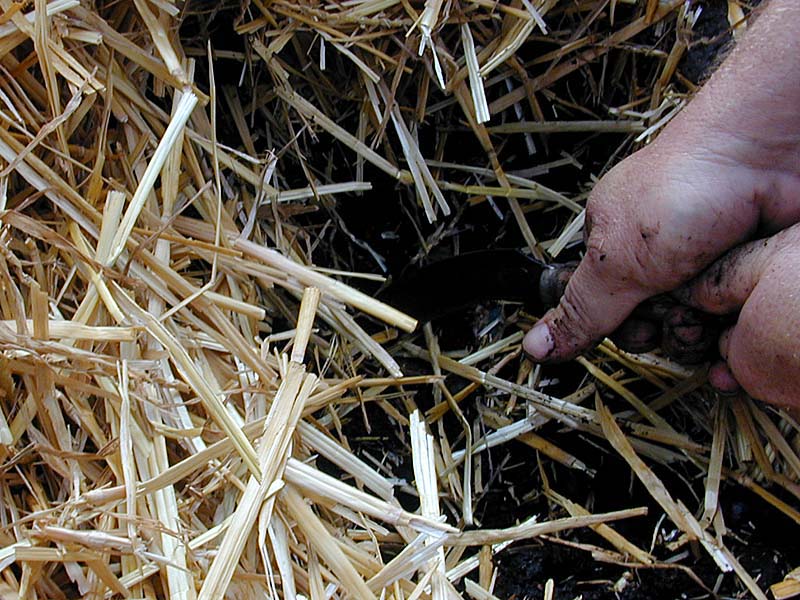 click here for Hi Res image Along the perimeter of the site, "X" shape slots are made in the cardboard with a scythe. |
||
|
|
||||
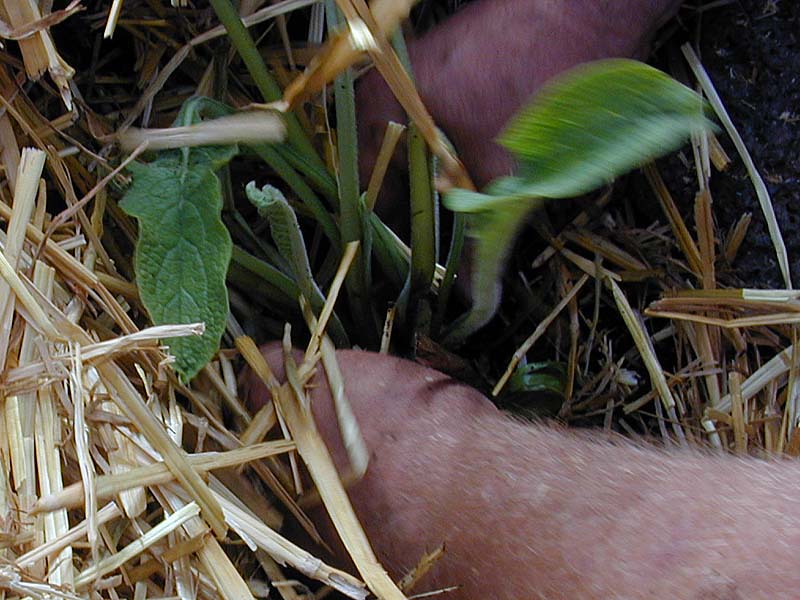 click here for Hi Res image The roots of Comfrey divisions are inserted in the slots. The Comfrey roots have some of their leaves attached and are planted through the cardboard mulch into the soil beneath. |
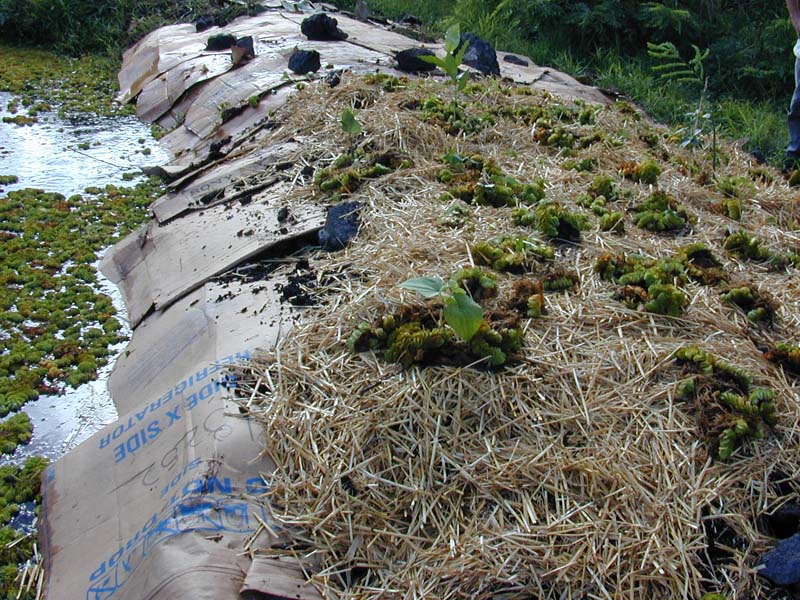 click here for Hi Res image Other plants such as mulberry, awa, edible lanna, sweet potato are inserted and Lemna is piled around the plants for additional nutrients. |
|||
|
|
||||